Ask an injector
Botox brow lift: arch, fox eye, or both?
Your brows have muscles pulling them down all day. Here is where Botox goes for more arch, for a fox eye lift, or both, and how much lift to expect.
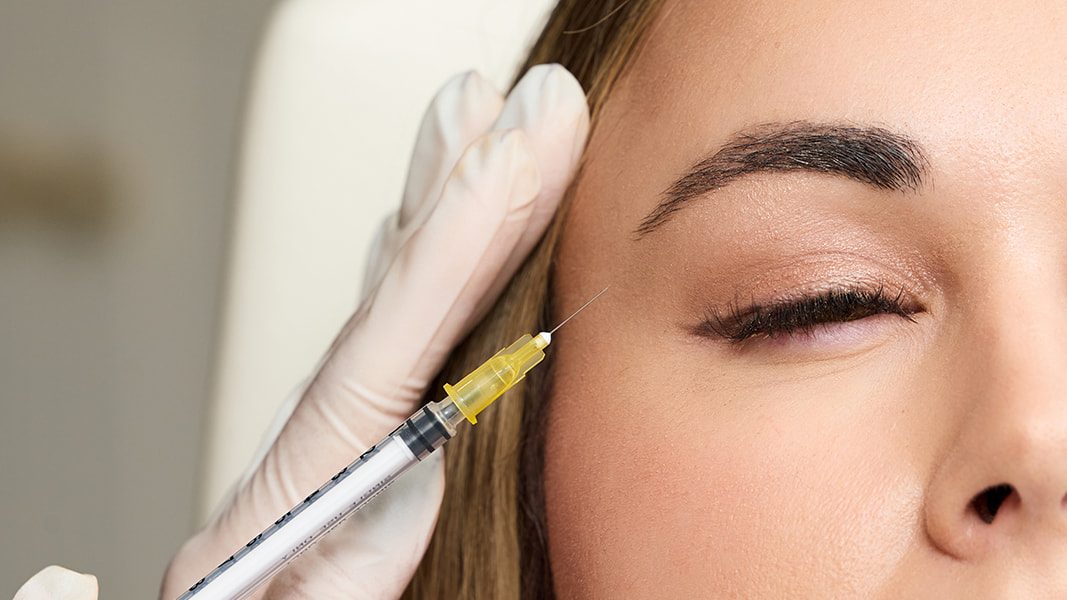
A Botox brow lift relaxes the muscles that pull your brows down so your forehead muscle can lift them. Treating between the brows (the glabella) gives more arch. Treating the outer eye muscle (lateral orbicularis oculi) lifts the brow tail for a fox eye look. Treating both usually gives the most complete lift, typically 1 to 3 mm.
Every time I post about brows, the comments split into two camps: team arch and team fox eye. You don't have to pick based on a trend. Your anatomy tells me which one will work, and for a lot of my patients the answer is both.
How does a Botox brow lift work?
Your brow position is a tug of war. Only one muscle lifts your brows: the frontalis, the broad muscle across your forehead. Several muscles pull them down. Between the brows you have the procerus, corrugator supercilii and depressor supercilii. Around the eye, the outer ring of the orbicularis oculi pulls the tail of the brow down every time you squint or smile.
Botox doesn't lift anything on its own. It relaxes the muscles that pull down, so the frontalis wins more of the tug of war. Where I place it decides which part of the brow rises.
One note on labels: Botox Cosmetic is FDA-approved to soften frown lines, crow's feet, forehead lines and neck bands. A brow lift is a well-documented effect of treating those muscles strategically, not a separate approved indication.
Botox for more arch: treating the glabella
The glabella is the area between your brows where the "11" lines form. Treating it relaxes the depressors that drag the inner and middle brow down and together. With less resistance, the frontalis lifts the brow more effectively, and the arch sits higher and looks more open.
Best for: brows that look flat, low in the middle, or angry at rest.
Botox for a fox eye: treating the lateral orbicularis oculi
The fox eye look is all about the tail of the brow. The lateral orbicularis oculi sits under the outer brow and pulls it down. A few precise units there let the tail rise.
The tail is usually where Botox gives the most visible lift, because the outer brow has the least support from the forehead muscle above it.
Best for: an outer brow that droops, or anyone who wants a more lifted, almond-shaped eye.
Why treating both gives the most lift
If you want to maximize a Botox brow lift, treating both areas relaxes the inner and the outer depressors at the same time. The whole brow can rise, and the change is usually most noticeable toward the tail.
A few millimeters sounds small. On a face, it isn't. A millimeter or two in the right spot is often the difference between tired and awake.
How much lift can you expect?
A Botox brow lift typically raises the brow 1 to 3 mm. Results vary with your muscle strength, skin thickness and how your brows sit at rest.
You'll usually start to see the change within a few days, and the full result usually shows at about two weeks. For frown lines, Botox Cosmetic's label puts the effect at roughly 3 to 4 months, so plan on maintenance a few times a year.
Why forehead Botox can make your brows heavier
This is the part most people don't know. Because the frontalis is the only muscle that lifts your brows, too much Botox in the forehead can lower them. Botox Cosmetic's prescribing information lists brow drooping in about 2% of people treated for forehead lines and recommends treating the forehead together with the frown lines to reduce that risk.
When a patient tells me she wants lift, I treat the depressors fully and the forehead lightly, or not at all. A smooth forehead and a lifted brow are a balance, not two separate goals.
Who is a good candidate for a Botox brow lift?
You're likely a good candidate if your brows lift easily when you raise them, but sit low at rest, or if the tail droops when you smile or squint. A Botox brow lift won't fix every kind of heaviness:
- Extra eyelid skin. If skin rests on your lashes, that's the eyelid itself. Upper blepharoplasty, a surgical procedure, removes that skin. No injectable will.
- Hollow temples. When the temples lose volume, the outer brow loses support. Juvéderm Voluma XC is FDA-approved to restore volume in hollow temples.
- Temples that need longer-term support. Biostimulators like Sculptra, placed in the temples, help your skin build its own collagen so support for the outer brow returns gradually.
At HēBē Skin Health, our team checks all three before recommending a plan, because treating the wrong cause is the fastest way to be disappointed.
FAQ
Is a Botox brow lift permanent?
No. Botox wears off as the nerve-muscle connection recovers, typically in about 3 to 4 months. Many people find the lift lasts a bit longer with regular treatments.
Should I choose arch or fox eye?
It depends on where your brow sits and which muscles pull hardest. Flat or low inner brows usually respond best to glabella treatment. A drooping tail usually responds best to lateral treatment. If you want the most lift, treating both is often the answer.
Can Botox make my brows droop?
It can if too much is placed in the forehead, because the frontalis is the muscle that raises your brows. A careful injector doses the forehead lightly when lift is the goal.
How long does a Botox brow lift take to work?
Most people notice a change within a few days, and the full result is usually visible at about two weeks. That's a good time for a follow-up check.
Is a Botox brow lift the same as a surgical brow lift?
No. Botox gives a subtle lift of a few millimeters by changing muscle balance. A surgical brow lift repositions the tissue and lasts years. If heaviness comes from excess eyelid skin, a surgical eyelid lift is the more effective option.
Find your lift
Arch, fox eye or both is a decision we make with your face in front of us. Book a consult at HēBē Skin Health in Laguna Beach or Claremont and our team will look at how your brows sit and move, and what's pulling them down, before we recommend a plan.
Sources
- BOTOX Cosmetic (onabotulinumtoxinA) Prescribing Information, AbbVie
- Juvéderm Voluma XC for temple hollows receives U.S. FDA approval, AbbVie
- Brow and forehead lift, American Academy of Facial Plastic and Reconstructive Surgery
Found this from my reel? Share it with a friend, and follow @lipsandlattes for more.
Nicole